Image
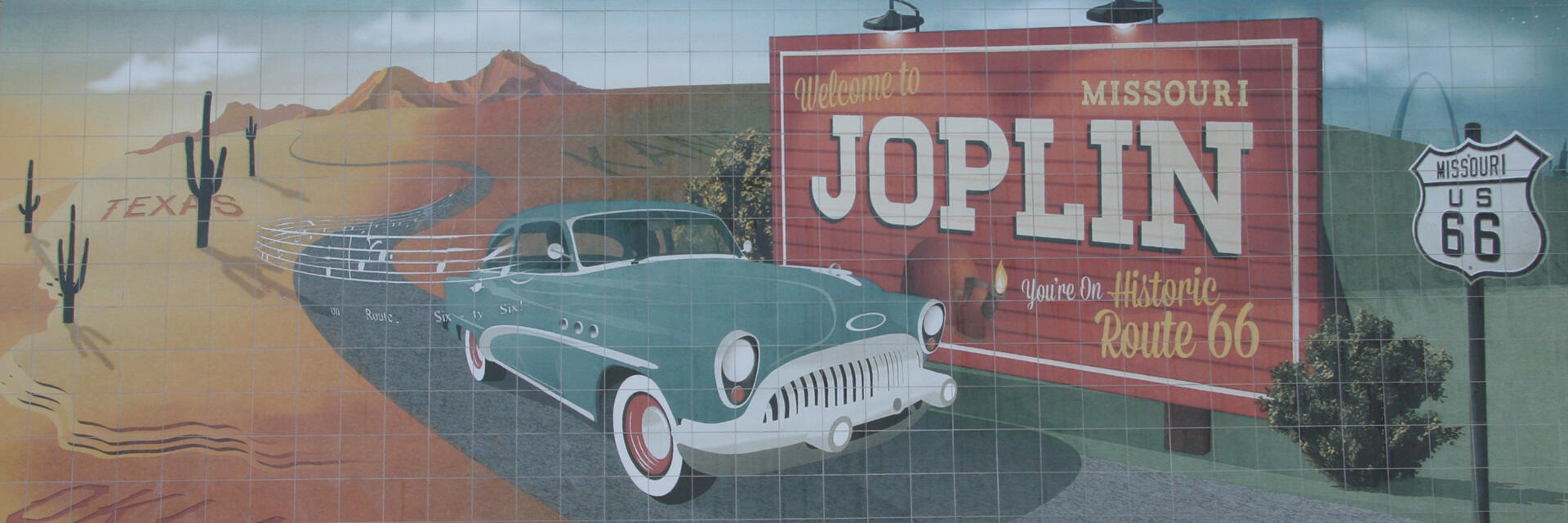

This page tells the story of Route 66 and local landmarks along the Mother Road.
Route 66 is forever etched into the history of Joplin. From the dream of one man, Cyrus Avery of Tulsa, Oklahoma became the first all paved highway from Chicago to Los Angeles, passing through the heart of Joplin.
From the routes beginning in 1926 until it was disestablished in 1985, Route 66 navigated through Joplin, east to west, and for a while right down Joplin’s Main Street. Early Joplin Hotels such as the Connor and Keystone benefited greatly from the increased traffic on the early alignment.
At the time Route 66 was established, Joplin offered a tourist campground within Schifferdecker Park. The campground was in front of what is now the Joplin History & Mineral Museum building. The camp offered water and restrooms for campers. At the Southwest corner of Schifferdecker Park the Jefferson Highway intersected with Route 66, adding to the popularity of the parks tourist campground.
Route 66 became the staging ground for mass migrations of people chasing the promise of work and a better life in California during the Great Depression and Dust-bowl era of the 1930s. John Steinbeck coined the term “The Mother Road” in his novel, The Grapes of Wrath.
During World War II, Route 66 became a vital artery connecting military camps and supply depots, such as access to Camp Crowder and the British Fighter Pilot Training Base on the north side of Miami, Oklahoma. Personal travel by car was discouraged during the war due to gasoline rationing. Women stepped up to perform typically male jobs, as featured in a 1942 Joplin image along Route 66 of women gas station attendants at 7th and Wall Avenue. The image is one of many in the museum’s Route 66 display.
During the post World War II “Boom Years,” Tourist Courts and Motels sprang up along the 1950s alignment through Joplin. Sprawling Motor Courts such as the Koronado Kourts, Little King Courts, and The Elms Motel offered heated and air conditioned cabins with individual parking garages. So many dance halls, bars, and night clubs were along the West 7th section of Route 66 that locals referred to this stretch through town as “the strip.”
For the African American travelers on Route 66 the Green Book was essential. The Green Book listed safe establishments to eat, purchase gas, and sleep. Two of the tourist homes listed in the Green Book for Joplin are still standing. Fannie Tutt of Joplin, offered not only a room but a meal to travelers.
During the late 1950s the interstate highway system we know today began replacing Route 66. When interstate 44 opened through Joplin in the early 1960s, motels, hotels, and restaurants began to migrate south along the new highway. The once fashionable motor courts along Route 66 lost favor with the public and soon fell victim to new development.
At the Joplin History & Mineral Museum we offer a glimpse of what was along Joplin’s Route 66 alignments. The Route 66 display includes a 72’ long mural featuring a mix of historical images and current attractions along the entire route. Artifacts from Joplin Route 66 businesses are displayed in the exhibit.