Image
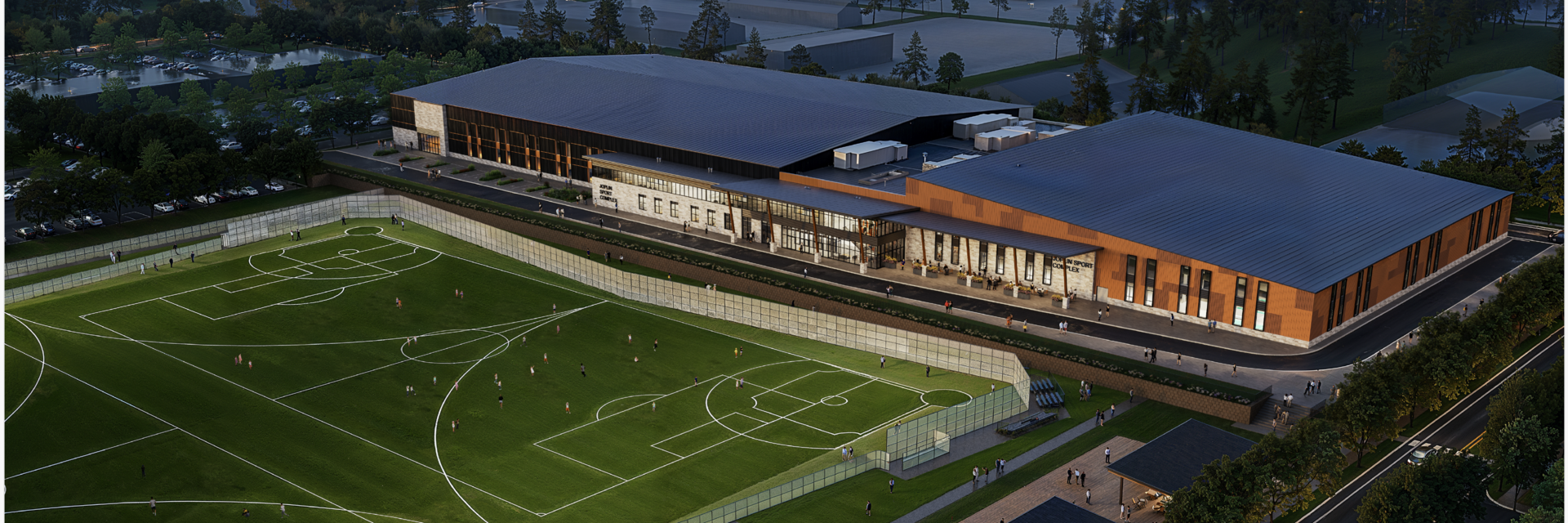

The developer, Woodsonia, (which has established Prospect Village LLC for this particular project), has proposed to redevelop properties near 20th & Range Line. If the project receives all required approvals, the multiuse development will include:
An approximately 135,000 square foot indoor athletic center with two adjacent artificial turf outdoor athletic fields completing the sports complex.
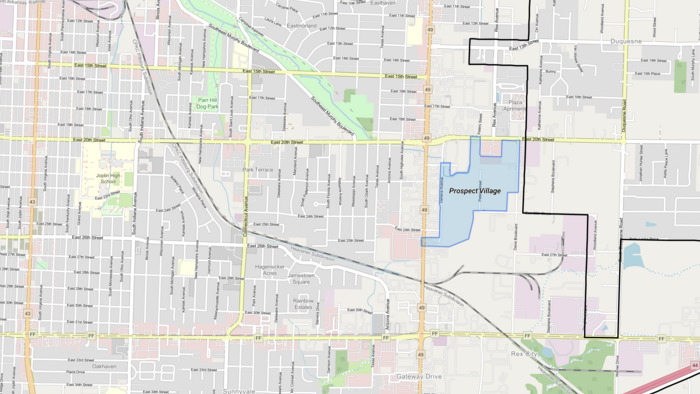
Prospect Village will be a redevelopment of approximately 80 acres to the southeast of the intersection of 20thStreet and Range Line Road, and south of 11th Street and north of the Kansas City Southern rail line.
Woodsonia Real Estate LLC is the real estate property developer which established Prospect Village LLC. Woodsonia is experienced in managing construction of such development projects. In fact, they developed the 32nd Street Place development which includes the new Menards, The Boulevard Apartments (250 units) and the B&B Movie Theater and Entertainment Complex currently under construction. That development also used TIF and CID financing as is proposed for Prospect Village.
The sports complex consisting of the indoor athletic center, outdoor turf fields, and parking area will be publicly owned. A Community Improvement District (CID) will own the sports complex in partnership with the City of Joplin, and the facility will be managed and operated by an independent contractor working on behalf of the City and CID board.
The developer will own the rest of the properties in the development, either leasing properties to tenants or selling lots to businesses as construction is completed.
The City will own public infrastructure like roads, storm water facilities, the sports complex and its parking areas.
In May of 2023, City Council were presented with recommendations for how to increase tourism to Joplin. The study, conducted by CSL International, a tourism consulting firm, recommended an indoor sports venue as the most competitive way for Joplin to draw visitors as opposed to various other options for different types of venues. The study, performed on behalf of the city’s tourism stakeholders, prescribed an indoor venue capable of hosting tournaments for sports such as basketball, volleyball, and pickleball.
Woodsonia reviewed the CSL report and sought to plan a project which could meet those objectives. They looked at properties which might be suitable for mixed-use development where residential, commercial, hotel properties and anchor retail stores could surround a publicly-owned indoor athletic center. The idea is to construct such an attraction in a convenient location where it can be surrounded by the types of businesses which families of visiting athletes may frequent. Woodsonia also knows there is desire in the community for an additional grocery store option, and there would be interest from hotels and other retail businesses in locating near such a sports complex. They have tried to plan the proposed development in such a way that such tenants would be attracted to own or lease property within the development.
The project would provide Joplin with a sports complex (consisting of an indoor athletic center and outdoor turf fields) which local families can use during the week, and which would be booked to host tournaments on weekends which would draw athletes and their families to visit from other parts of the region and nation. The facility would also be available for local programming on weekends when not hosting tournament events.
Tournaments which draw visiting families to Joplin result in more spending at Joplin hotels as well as restaurants and other retail. Out-of-town visitors are expected to support 26,972 hotel nights and about $12.4 million in total spending at Joplin businesses. That translates to support for about 167 local jobs, not including staff at the sports complex.
This additional spending from out-of-town guests helps boost the tax base, as these visitors pay sales taxes on the expenditures they make in our community, and those tax revenues help us invest in improving our community.
The Joplin Sports Authority (JSA) already has shown nearly $9 million in economic impact from the 27 tournaments they were able to host in the Joplin area in fiscal year 2024 using existing facilities. This economic impact number only counts athletes, coaches, referees and other event staff, and does not capture the impact from the families and loved ones who travel in support of young athletes.
JSA has stated it would be possible to attract more tournaments to Joplin with similar economic impacts if we had a suitable indoor sports complex to host regional events.
This development will grow the tax base, which will provide more funding for our city, schools, libraries, and other taxing jurisdictions.
The redevelopment of a current blighted property and clean-up of an EPA superfund site into a productive use of land along one of our city’s primary commercial corridors would, in of itself, represent a better use of our available land resources and allow this under-used space to become a safe home for people, businesses, and a destination for visitors and our own local athletes and their families.
New apartments would provide new places for Joplin residents to live in proximity to restaurants, retail, and the new park area along the south side of the sports complex.
New retail spaces would provide locations for businesses to operate in high-traffic areas.
A new anchor retail store (we’re hoping for a grocery store) would provide more retail shopping options for the community.
The stormwater drainage through the site has been designed to create a park area with sidewalks and a beautiful outdoor space for visitors to explore on foot along a water feature.
Total project costs are estimated at $307.3 million, but the estimated costs for the sports complex portion of the project is estimated at $62.5 million. The developer would be privately investing a total of $147.2 million and carries the risk of paying back loans for the project.
The project will only be possible with creation of two Community Improvement Districts (CID) and Tax Increment Financing (TIF). CIDs and TIFs are economic development incentives authorized by the State of Missouri and used in communities across many states to help with the cost of public improvements as developers take on the construction of large projects with a mix of private and public benefits. Essentially, these incentives allow projects to pay for themselves by financing public improvements such as construction of the sports complex and infrastructure improvements like streets, utility improvements, sidewalks, and stormwater improvements.
The developer will ultimately propose two overlapping CIDs. The first will be known as the Joplin Sports Facility CID, and the second will be the Woodsonia Marketplace CID.
The primary purpose of the Joplin Sports Facility CID will be to fund construction of the public indoor sports complex and outdoor fields, whereas the primary purpose of the future Woodsonia Marketplace CID will be to fund public improvements and other site improvements necessary for the overall project.
The Joplin Sports Facility CID petition was approved by Joplin City Council and adds a 1% sales tax at properties within the district boundaries. This additional sales tax will end at the earlier of 27 years from the date the district is established, or until the entire cost of the CID services and CID projects as set forth in the petition are repaid, or until any bonds issued are fully repaid.
The developer has not yet submitted their petition for the Woodsonia Marketplace CID, but plan to request another 1% sales tax increase within this district. An additional $4.7 million would be captured by TIF within this CID.
If both CIDs are approved, this would mean there would be up to 2% additional sales tax on qualifying goods which are purchased at retail locations inside the overlapping districts, for a period not to exceed 27 years. The additional sales tax could actually be removed earlier, if the costs of public improvements financed through CIDs are paid off early.
TIFs are not tax increases. Rather, they are a way to ensure taxing entities (like the City, school district, and library) continue to get the same tax revenue they’ve been getting from properties at the level they were getting before the redevelopment project began and captures the increased amount of taxes generated by the development’s improvements, to repay certain public costs for the development. Then, once the costs of those public improvements are paid off, the additional tax revenue flows directly as increased revenue for the taxing entities.
In this case, the TIF would contribute an estimated $38,025,000 through PILOTs (Payments in Lieu of Taxes) and EATs (Economic Activity Taxes). The Joplin TIF Commission, which includes representatives from multiple entities which impose local property taxes, including the school district, library, and senior center, approved this TIF project.
How PILOTs work, is that they lock in the current property tax revenue for the taxing jurisdictions such as the City, county, school district, etc. Instead of the taxing jurisdictions immediately receiving increased property tax revenue as the assessed value of the property increases following redevelopment, the taxing jurisdictions only receive property tax revenues each year equivalent to what the property tax assessment was before the redevelopment improvements were made.
For example, let’s say a property’s assessed value causes a $10,000 annual tax bill for the property owner before improving the property or building anything on it, and that tax revenue is divided among the taxing jurisdictions. Then the property owner is approved for a TIF and is going to use PILOTs to pay off the cost of public improvements to the land. The property developer makes the public improvements (such as utilities, streets and sidewalks) and also makes private improvements by constructing commercial buildings on the previously vacant property, which now make his property worth significantly more. This improved value will be reflected in a higher property tax assessment. So now, the tax bill might be $100,000 in the first year after construction is completed. However, for a number of years, a maximum of $10,000 will go to the taxing jurisdictions, while the incremental increase (in this scenario, the incremental increase amount is $90,000) flows in the first year to repay the public costs such as street, sidewalk and utility improvements.
Once TIF reimbursable costs are paid off or the maximum number of years approved for the TIF is reached (whichever comes sooner), the value of the now much larger annual property tax bill will benefit the taxing jurisdictions. This way, once the TIF is closed, taxing entities like the City and the school district will see an increase in their tax revenue thanks to this project. In our scenario, the taxing entities would be sharing a $100,000 tax bill annually after the project and TIF expiration in contrast to the $10,000 tax bill before the project started and without the development.
How EATs work, is that 50% of the new sales tax revenues generated from the redeveloped properties within the TIF are collected, but instead of being paid to the City (and other taxing jurisdictions like the county and 911) as tax revenue, are instead used to pay off the TIF reimbursable costs for the public improvements portion of the project, such as streets and sidewalks. Once those costs are paid off, the City and other taxing entities begin to benefit from 100% of the sales tax generated from the redeveloped properties.
You can find a more detailed breakdown of estimated project costs and which funding source will be used for each within the presentation provided by Woodsonia which is linked at the bottom of this page. In summary, the sources of funds for all estimated redevelopment costs are:
$147,175,000 : Developer Equity and/or Debt
+$38,025,000 : Amount of Reimbursable Costs from Payments in Lieu of Taxes (PILOTs) and Economic Activity Taxes (EATs) (Tax Increment Financing, TIF)
+$122,110,843 : Community Improvement District (CID) costs*
= $307,310,843 : TOTAL
*CID detail:
The City’s bond counsel, a legal firm advising the City on proper creation and management of economic development incentives, have structured the legal agreement to ensure compliance with state regulations.
The City also hired Baker Tilly, a consulting firm, to audit the developer to provide the city confidence that the business we are partnering with has a reasonable probability of successful management of the project. They also determined that this project would not occur “but-for” the public financing incentives (CIDs and TIF). They also reviewed the entire financial plan for the project.
The City’s volunteer Finance Committee, made up of Joplin citizens who have expertise in finance and accounting, also reviewed the proposal and testified to City Council in favor of the project and its financing. Committee Chair Russ Alcorn emphasized that the deal is structured so that financial risk lies with the developer rather than the City, should the economy take a downturn mid-project, or should there be any other issues delaying or preventing project completion.
The City of Joplin’s finances are not at any kind of risk with this proposed development. If the project fails, we stand to lose no revenue. If the project is a success, we stand to gain significant revenue which can then be invested into more public improvements for our community.
At the January 21, 2025 meeting, council heard a first reading of Council Bill 2025-500 and voted in favor of approving a petition to establish the Joplin Sports Facility Community Improvement District. The council bill also passed on second and third readings. This bill created the district and approved a cooperative agreement between the City, the District, and Prospect Village LLC.
The anticipated schedule for additional public hearings related to this project at upcoming City Council meetings is tentative, and dates may change. As of late February, we are tentatively expecting the following public hearings and council votes:
The developer estimates that if construction can break ground at the end of 2025, it may take about 8 years for all the component projects to be completed, with the sports complex being built first, and hoping to open that facility in 2027.
If you'd like to get updates about this and other city projects, please sign up here for 'City Hall News' notifications. When we publish significant project updates, we will send a notification to all 'City Hall News' subscribers.