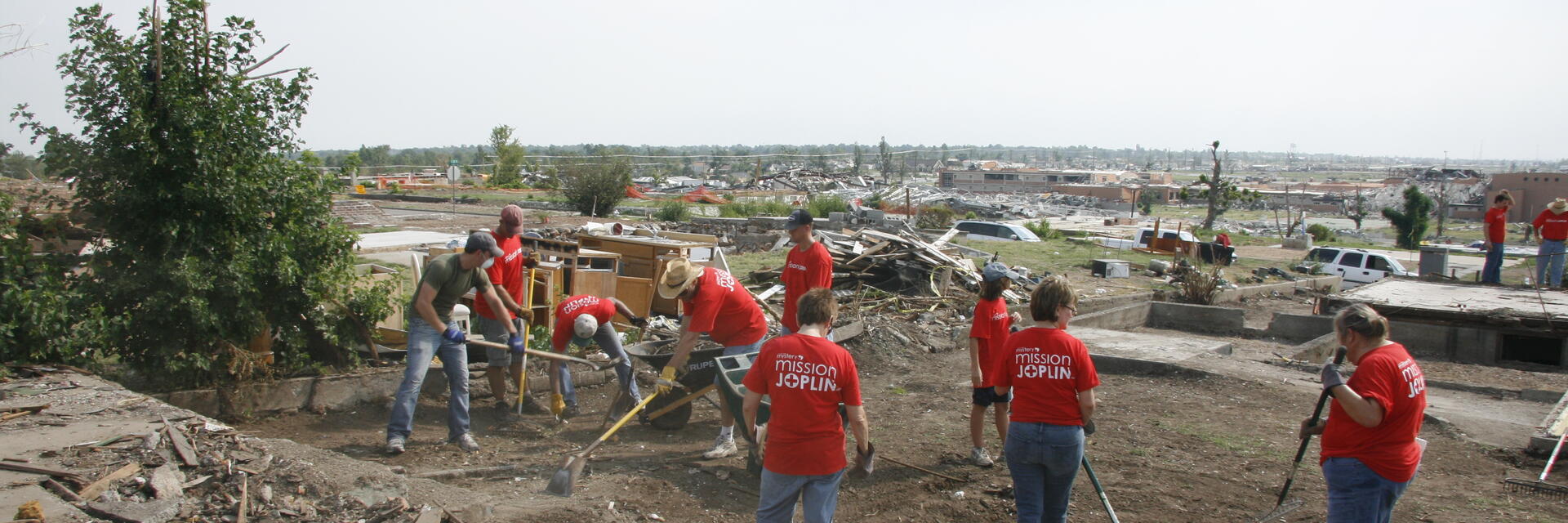
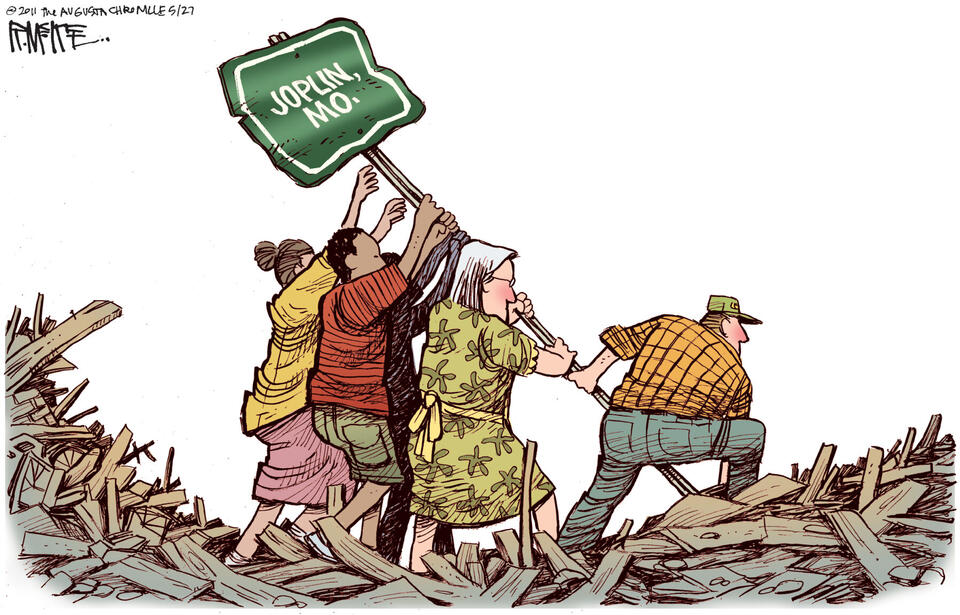
Information represents Jasper and Newton counties as a whole, including cities of Joplin and Duquesne.
- More than 13 federal agencies supported critical emergency needs and functions for Jasper and Newton counties. At peak staffing, more than 820 FEMA employees worked the Joplin response and recovery efforts.
- FEMA and state officials immediately established four joint task forces to manage the largest recovery priorities – Housing, Debris Removal, Schools and Critical Infrastructure. These task forces included numerous other local, state and federal agencies – all with the goal of bringing an experienced, comprehensive approach to recovery in these key areas.
Information represents Jasper and Newton counties as a whole, including cities of Joplin and Duquesne.
Individuals and Businesses:
10,746 Missourians in Jasper and Newton counties registered for state and federal disaster assistance.
- More than $21 million in grants has been approved for eligible Missourians in the two counties to help pay for home repairs, temporary housing and other critical disaster-related needs through FEMA’s Individuals and Households Program.
- FEMA provided direct, temporary housing to 586 households occupying temporary housing units, among 15 sites throughout the metro Joplin area. As of June 9, 2013 - 586 households (100%) have moved out of FEMA temporary housing and into longer term or permanent housing.
- Disaster Unemployment Assistance was provided to help workers whose employment was impacted by the tornado but who did not qualify for regular unemployment aid. In the two counties, 541 claims totaling $353,943 were paid.
- A grant of more than $5.3 million from the FEMA Disaster Case Management Program was awarded to the Missouri Department of Economic Development to fund disaster case managers to work directly with survivors. The case managers, from agencies such as Catholic Charities of Southern Missouri, American Red Cross, Salvation Army and Lutheran Social Services, also have been assisting with developing individual disaster recovery plans that may include referrals, monitoring of services and advocacy, as needed.
- FEMA has provided more than $4.8 million to help fund crisis counseling services through community-based outreach and short-term interventions. The services help disaster survivors review their recovery options, discuss their reactions and learn coping strategies.
- The U.S. Small Business Administration (SBA) has approved more than $43.4 million in low-interest disaster loans for 521 tornado-impacted individuals, businesses and not-for-profits. SBA provides these loans to help cover property losses. In addition, SBA provides economic injury loans (working capital) for eligible businesses.
- 417 low-interest disaster loans to homeowners for $26.8 million
- 100 low-interest disaster loans to businesses for $16.4 million
- low-interest disaster loans to not-for-profits for $256,400
- FEMA recovery specialists helped the Joplin community establish a citizen-based, long-term recovery effort known as the Joplin Area Citizens Advisory Recovery Team (CART). With input from a broad cross-section of the community, CART developed a long-term recovery strategy, the implementation of which is underway.
- FEMA continues to work with a local Long-Term Recovery Committee, representing more than 50 voluntary agencies. To date, the committee has handled more than 1,500 cases of unmet, disaster-related needs.
- Public Assistance:
- FEMA provides grants to local, state and federal governmental entities, tribal nations and certain not-for-profit organizations to help reimburse eligible costs to remove debris, provide emergency protective measures and to repair or replace damaged public infrastructure and facilities.
- FEMA expects to spend nearly $150 million* in both counties to help remove debris, provide emergency protective measures and to permanently repair or replace public buildings and infrastructure damaged or destroyed by the tornado. About $20 million of this amount will help fund eligible recovery costs for the City of Joplin; about $2.5 million for the City of Duquesne. So far, about $97.5 million has been paid to the State of Missouri for disbursement to 25 eligible entities, including local governments, school districts and critical facilities such as hospitals.
- * Funding subject to change based eligibility review process and potential insurance proceeds. Does not include costs for U.S. Army Corps of Engineers Debris Removal operations.
- FEMA provided more than $341,000 to the Corporation for National and Community Service for assistance from AmeriCorps to support local and state authorities. About 350 AmeriCorps members from seven states worked more than 76,000 hours in Joplin on various recovery projects, including 2,723 homeowner assistance requests, coordinating donations, removing volumes of debris, including damaged trees and stumps, building a recreational train at FEMA’s community housing sites, planting more than 900 new, donated trees for homeowners and helping more than 150 Joplin homeowners and renters in moving from temporary living situations to more permanent housing. AmeriCorps’ efforts, which lasted 18 months, also helped Joplin earn an offset towards the cost-share of some of its local recovery costs.
- Federal, state and local officials teamed up with The Independent Living Center in Joplin and other disability organizations to serve as a resource for individuals with disabilities, access and other functional needs -ensuring that people with disabilities, seniors and those with low English proficiency had the same opportunity as others to access and understand disaster assistance.